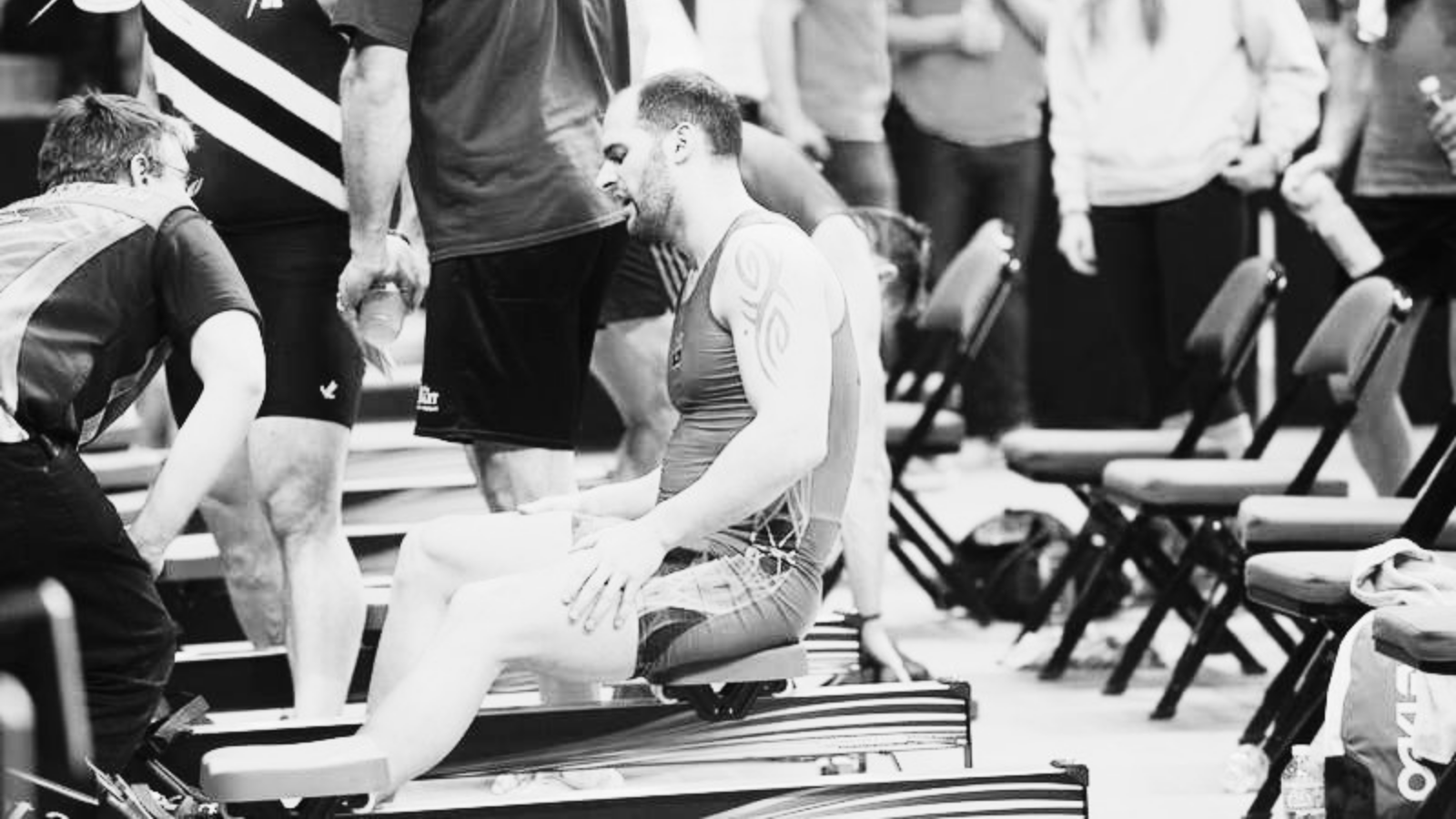
I’ve had a bad back for years.
Military service. High-level sport. Four seasons of rowing with a spinal stress fracture.
Add in hip surgery. Ankle issues.
I know what it’s like to wake up stiff, tight, restricted or in spasm.
It’s frustrating. It’s limiting. It affects how you move, how you work, how you think. It’s exhausting.
Years ago, everyone had a bad back.
Manual handling training became the answer.
Lift like this. Move like that.
Organisations adapted because they had to.
It became a recognised risk.
Now look at where we are.
Stress in the workplace is everywhere.
And it’s being treated in a very similar way to how bad backs were treated before organisations took it seriously.
The difference?
The scale.
Recent data from the Trades Union Congress highlights it clearly.
79% of safety representatives say stress is one of the most common hazards in their workplace.
Nearly a million people are dealing with work-related stress, depression or anxiety.
22 million working days lost.
That’s not a wellbeing issue.
That’s an operational problem!!
“Stress is no longer an individual issue. It’s an organisational risk.”
Here’s the uncomfortable part.
Most businesses will say they’ve got this covered.
They have an EAP.
A wellbeing policy.
Wellness days and talks.
Maybe a survey once a year.
But ask yourself this.
If 79% of workplaces are flagging stress as a major issue …
Is what we’re currently doing actually working?!
Because this is where it starts to shift.
When manual handling became a problem, organisations were forced to act.
Processes changed. Training changed. Accountability changed.
Stress is heading in the same direction.
If the data continues like this, it’s not a stretch to say organisations could soon be held accountable in a far more direct way.
Not just morally.
Legally.
“If you know there’s a risk and do nothing, it stops being oversight and starts becoming liability.”
And this is where most organisations are exposed.
They are reacting late.
Supporting people once the issue has already surfaced.
Rather than preventing it in the first place.
Because stress doesn’t just show up as absence.
It shows up in:
Poor decisions. Shortened tempers. Reduced clarity. Inconsistent performance.
It creeps in quietly.
Just like a bad back used to.
“You don’t notice stress building. You notice the consequences.”
At Warrior Wellness Movement, this is exactly what we address.
Not surface-level wellbeing.
Not reactive support.
We look at how health, pressure and performance interact inside leadership teams and organisations.
We use health intelligence physiological data. VivaScore
Because if you don’t understand that relationship, you’re managing symptoms.
Not the problem.
The question isn’t whether stress exists in your organisation.
It does.
The question is whether you are doing enough to protect your people …
And ultimately, protect your business.
Because just like the bad back …
Ignoring it for too long only ever ends one way.
Chat soon, Ollie
#WorkplaceStress #LeadershipRisk #OperationalHealth #ExecutivePressure #PerformanceRisk #PreventativeStrategy