Watching one man changed the way I think about resilience, capability and performing under pressure.
There’s a particular type of person I speak to regularly.
They’re successful.
They run businesses, lead teams, manage significant responsibility and have people depending on them.
But they’re absolutely knackered.
They’ve put on weight.
They’re not training consistently.
Sleep isn’t what it used to be.
Energy disappears halfway through the afternoon.
They don’t feel particularly good physically and they know they’re not looking after themselves properly.
But they’re still functioning.
Still working.
Still providing.
Still getting things done.
And because they’re still functioning, they keep telling themselves the same thing.
“I just need to get my act together.”
I understand that mentality because I spent years doing exactly the same thing.
I thought resilience meant being able to take more.
More pressure.
More discomfort.
More setbacks.
Keep going. Stay composed. Find a way.
Then, during one of the most difficult periods of my military career during rehabilitation, I met a Colonel who completely changed how I thought about resilience.
He was also a patient.
What struck me wasn’t that he was tougher than everyone else.
It was that he didn’t waste energy fighting reality.
If something had changed, he accepted that it had changed.
If there was a limitation, he worked with it.
If something was difficult, he dealt with what was actually in front of him.
One movement at a time.
One action at a time.
One decision at a time.
Watching him made me realise I was doing the complete opposite.
I was fighting my injuries.
Fighting pain.
Fighting what my body could no longer do.
And constantly comparing myself with the person I thought I should still be.
None of that changed my circumstances.
It just exhausted me further.
And I think a lot of people are doing exactly the same thing with their health.
They’re 45, but expecting their body to respond like it did at 25.
They’re sleeping five or six hours but frustrated that they don’t have enough energy.
They’re working twelve hour days, managing a business, raising a family and wondering why training a few times a week suddenly feels impossible.
They’re carrying an extra two stone and beating themselves up because they can’t seem to get rid of it.
They know what they should be doing.
They just can’t seem to do it consistently anymore.
So they fight harder.
More discipline.
Another diet.
Another training plan.
Another promise that Monday will be different.
But what if the first step isn’t trying harder?
What if it’s accepting that something has changed?
That’s not making excuses.
And it certainly doesn’t mean accepting poor health.
It means being accurate about the situation you’re actually in so you can finally do something useful about it.
Because you can’t solve today’s problem while constantly comparing yourself with yesterday’s circumstances.
That’s what the Colonel taught me.
He wasn’t stronger because he ignored reality. He was stronger because he accepted it sooner.
That distinction has fundamentally changed how I think about psychological capability.
It’s also become part of the thinking behind Warrior Wellness Movement.
Health creates capacity.
But capacity is finite.
And constantly fighting your current reality uses up capacity before you’ve even started changing it.
That’s why one of the most useful questions I now ask when something isn’t working is:
“Am I spending my energy fighting reality, or solving the problem?”
Perhaps you’re not as fit as you used to be.
Perhaps you’ve gained weight.
Perhaps your energy has disappeared.
Perhaps work has consumed far more of you than you realised.
Perhaps you’ve spent years looking after everything and everyone except yourself.
You don’t have to be happy about any of that.
But you do need to be honest about it.
Because once you stop fighting where you are, you can finally start working out where you need to go next.
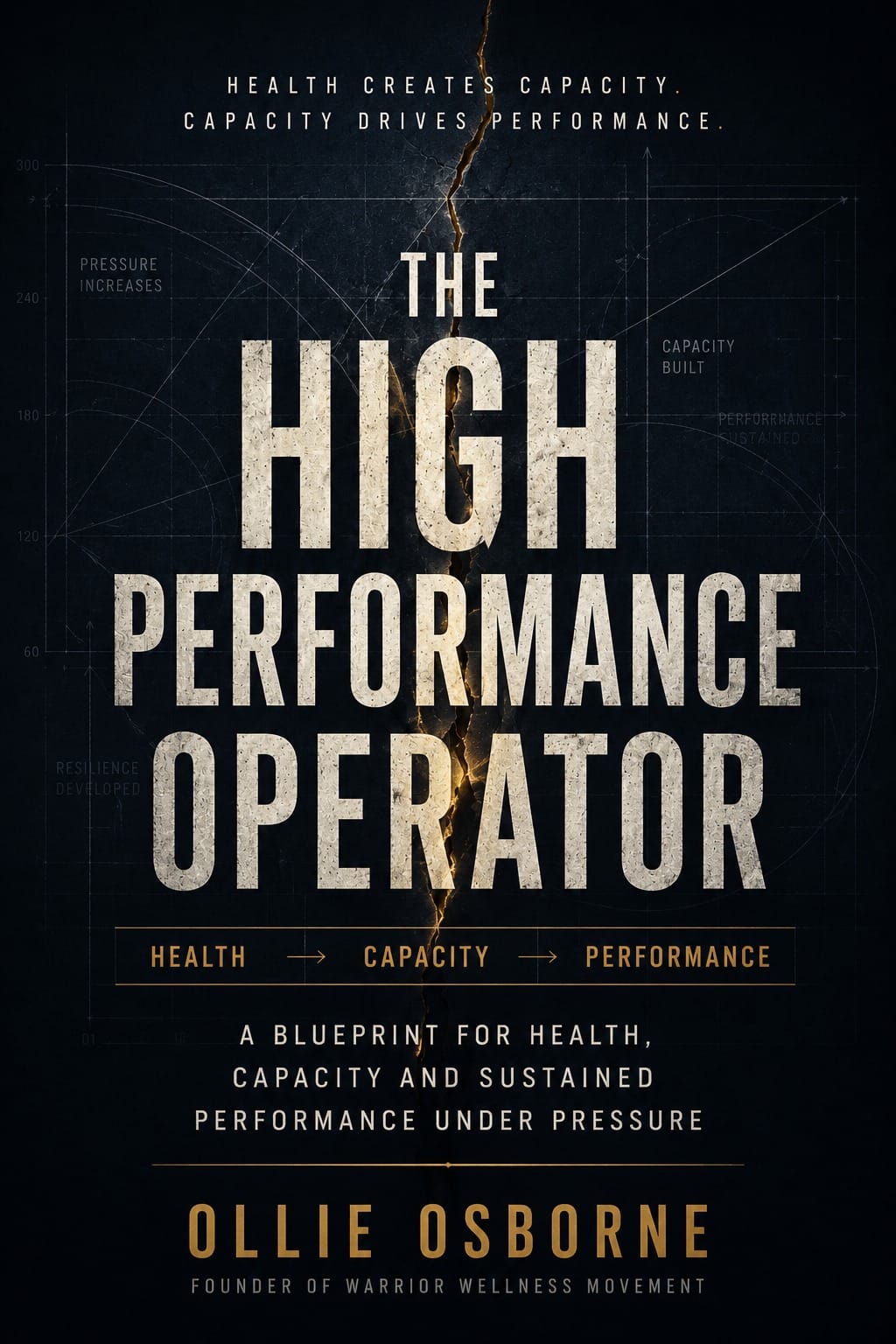
This lesson comes from one of my favourite chapters in The High Performance Operator. The Colonel is memorable, but the real value of that chapter was what watching him forced me to recognise about myself.
So I’ll leave you with the same question.
Where in your life are you currently spending more energy resisting reality than actually doing something about it?
Chat soon, Ollie.
#Leadership #Resilience #Performance #HealthCreatesCapacity #TheHighPerformanceOperator