Let’s be honest.
The word wellness has become a difficult one.
For some people it immediately creates an image of yoga mats, smoothies, mindfulness apps and someone telling you to breathe through your eyelids while sat cross-legged in a meeting room.
Which is probably why many senior leaders switch off the moment they hear it.
And to be fair…
I understand why.
Because most “wellness initiatives” are surface level.
A wellbeing day. A motivational speaker. A fruit basket in the office kitchen.
Meanwhile the leadership team is exhausted, stress is through the roof and people are quietly burning out while pretending everything is fine.
That’s not wellness.
That’s theatre.
At Warrior Wellness Movement, we look at this very differently.
We’re not interested in ticking HR boxes or making people temporarily feel better for a day.
We’re interested in protecting operational capability.
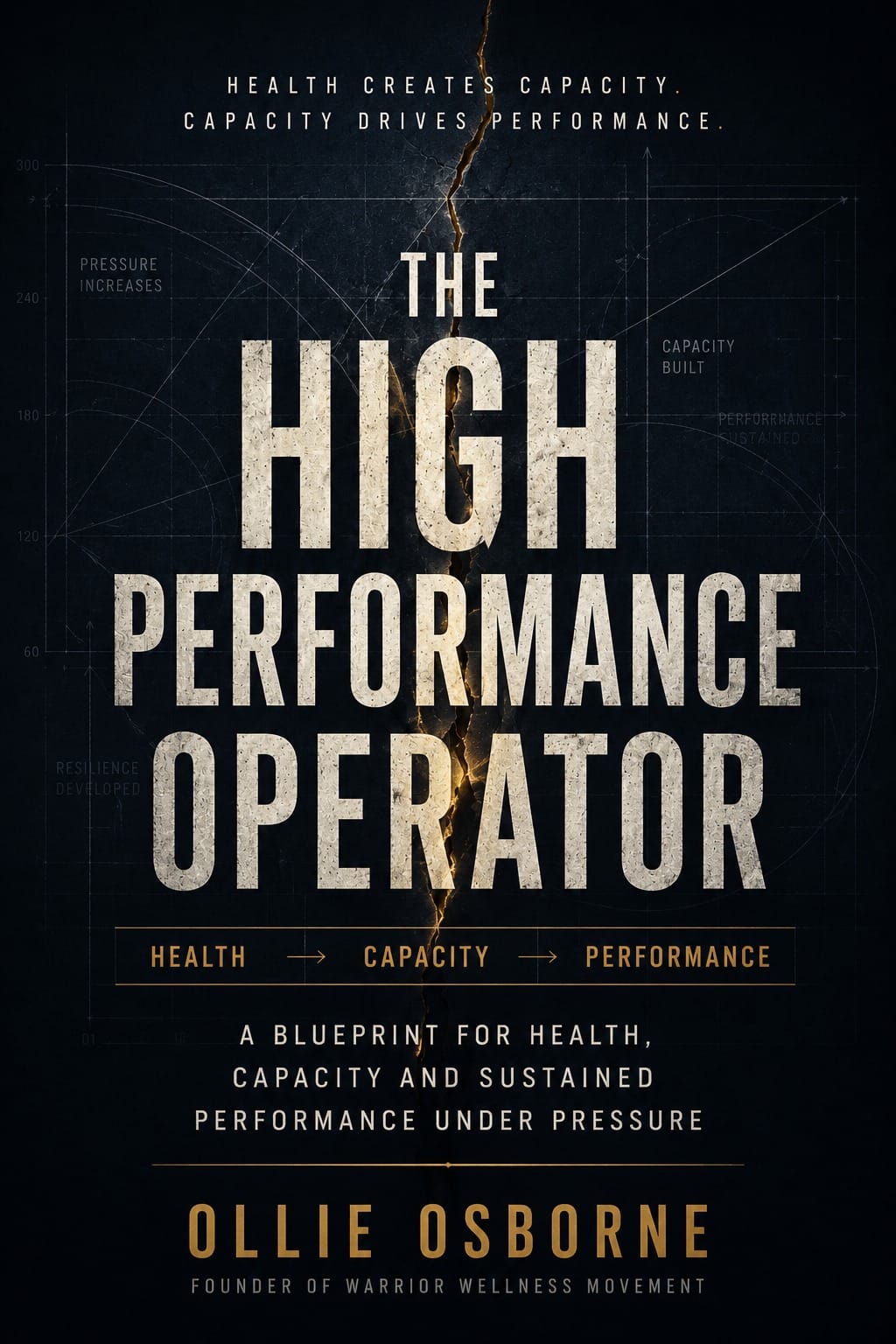
Because when health declines under sustained pressure, performance follows it.
Always.
That’s why our work combines lived experience from Royal Marines service, Special Forces, elite sport, international rugby, neurology, nutrition and leadership performance.
Not because it sounds impressive.
Because pressure leaves patterns.
And those patterns repeat themselves whether you’re in the military, elite sport or the boardroom.
“Pressure changes behaviour long before it changes results.”
This is why we talk about things like the body budget.
Because every decision, every deadline, every poor night’s sleep and every stressful week is a withdrawal.
And most leaders keep withdrawing without ever topping things back up properly.
Eventually something gives.
Not always dramatically.
Sometimes it’s just lower patience, poorer decisions, less clarity and less energy.
Over time, that becomes normal.
Then one day someone goes off sick with stress.
Or burnout.
Or anxiety.
And everyone acts surprised.
The data is already telling us this is a growing issue.
Work related stress levels across the UK are now at record highs.
And I think organisations need to wake up very quickly to the fact that “wellbeing initiatives” alone are no longer enough.
“If stress is predictable and measurable, then failing to act becomes a risk.”
This is why data matters.
Not opinions.
Not assumptions.
Data.
Using systems like VivaScore allows us to identify trends, pressure loads, recovery issues and physiological strain before they become visible problems.
That changes the conversation completely.
Now you’re no longer reacting to burnout after it happens.
You’re mitigating risk before it escalates.
And I genuinely believe this is where things are heading.
Because in the near future, organisations may find themselves under increasing scrutiny if employees suffer serious stress related issues while the company can only point towards an EAP and a wellbeing webinar as evidence they “tried”.
That’s not enough anymore.
Not for the modern workplace.
Not for high pressure environments.
“Wellness without structure, measurement and accountability is just good intention.”
This is why we build strategic partnerships with organisations.
Not to run perks.
Not to run events.
But to help leadership teams understand the relationship between health, pressure, performance and risk.
Because this isn’t about wellness as a trend.
It’s about protecting people.
Protecting leadership capability.
And ultimately protecting the organisation itself.
So maybe the question isn’t whether wellness is a dirty word.
Maybe the real question is whether we’ve misunderstood it completely.
Chat soon, Ollie
#LeadershipHealth #OperationalCapability #PerformanceRisk #ExecutivePressure #PreventativeHealth #HumanPerformance