One of the most dangerous things about Capability Debt isn’t that it exists – It’s that you rarely notice you’re carrying it.
Most people expect declining health to arrive with a dramatic event. A diagnosis, an injury, burnout or complete exhaustion, but that’s rarely how it happens.
More often, it develops so gradually that you adapt without realising. You become a little more tired. A little less patient. A little slower to recover.
You rely on another coffee to get through the afternoon. You stop exercising because work is busy. You wake up feeling as though you’ve never really slept. Your back aches more than it used to. You tell yourself it’s because you’re getting older.
None of these changes seem significant on their own. So you accept them.
Then they become your normal.
Looking back, I can see exactly when that happened to me. I was serving at HMS Culdrose as a Physical Training Instructor.
From the outside, everything looked fine. I was still doing my job. Still turning up every day. Still functioning, but my body was telling a very different story.
Years of injury, chronic pain and poor recovery had quietly accumulated.
One day, a couple of the lads decided to play a joke on me.
They raised my stand up desk and hid the power lead so I had to stand to work. Everyone was laughing. The assumption was that, as the Physical Training Instructor, standing all day wouldn’t bother me.
The reality couldn’t have been more different and within a short period of time, the pain became unbearable and I remember thinking to myself,
“I can’t keep living like this.”
It wasn’t a dramatic collapse. There wasn’t a defining moment where everything suddenly changed. It was simply the first time I acknowledged what had gradually become normal.
I had been functioning, but I wasn’t truly capable.
At Warrior Wellness Movement, I hear different versions of this conversation all the time. People rarely describe themselves as unhealthy. Instead they say things like,
“I just don’t have the energy I used to.”
“I can’t recover like I used to.”
“I thought this was just part of getting older.”
“I’ve been running on coffee for years.”
“I’ve got used to feeling like this.”
That last sentence always stands out – I’ve got used to feeling like this, because that’s exactly how Capability Debt works.
It doesn’t just reduce your physical, mental and emotional reserves. It changes your expectations of what normal feels like. You stop comparing yourself to how you once felt. You compare yourself to yesterday.
As long as you’re no worse than yesterday, everything seems manageable. Until one day you realise that the person you’re comparing yourself with has already been in decline for years.
That’s why our philosophy at Warrior Wellness Movement is so simple.
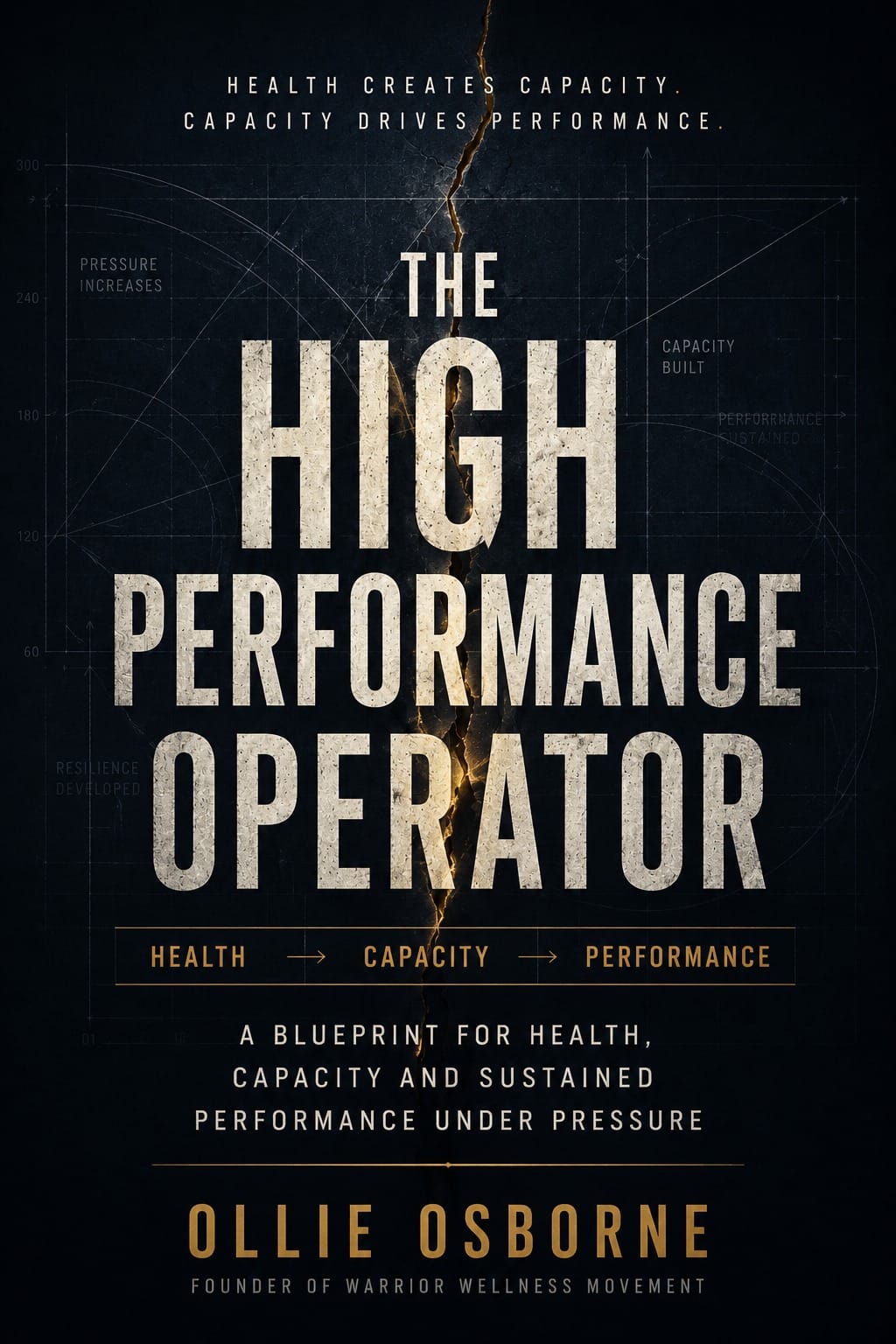
Health Creates Capacity. Capacity Drives Performance.
When health gradually deteriorates, capacity follows.
Performance may continue for a while because experience, determination and responsibility help you compensate, but compensation has limits.
Eventually, performance begins to reflect the health that’s been neglected for months or even years.
Perhaps the greatest risk isn’t that Capability Debt exists. Perhaps it’s that it becomes invisible to the person carrying it.
So here’s a question worth thinking about.
What have you accepted as normal today that wouldn’t have felt normal five years ago?
Chat soon, Ollie.