We hear a lot about burnout.
It’s become one of the most common explanations for why people suddenly struggle at work, lose motivation or feel unable to keep going.
But what if burnout isn’t actually the problem?
What if it’s simply the point where the problem becomes impossible to ignore?
Over the last few months, I’ve been developing an idea that sits at the centre of how I now understand health and performance.
I call it Capability Debt.
Capability Debt is the accumulated impact of repeatedly withdrawing from your physical, mental and emotional reserves faster than you restore them.
It doesn’t arrive overnight.
It develops quietly.
One poor night’s sleep becomes a week.
Exercise becomes something you’ll start again next month.
Meals become whatever is convenient.
Alcohol becomes part of switching off.
Stress becomes normal.
Recovery becomes something you’ll get around to when work calms down.
Only work rarely calms down.
Life keeps moving.
The withdrawals continue.
At first, you barely notice.
You’re still getting through the day.
Still leading meetings.
Still hitting deadlines.
Still providing for your family.
From the outside, everything looks much the same.
But underneath, something has changed.
You have less patience.
Less energy.
Less physical capability.
Less enthusiasm.
You recover more slowly.
Small problems feel bigger.
Simple decisions feel harder.
You tell yourself it’s just stress.
Or your age.
Or the demands of modern life.
At Warrior Wellness Movement, this is one of the most common patterns we see.
People rarely come to us because they believe they’ve accumulated Capability Debt.
They usually arrive with a different explanation.
“I’ve just been busy.”
“I think I’m getting older.”
“I’ve lost my motivation.”
“I’m probably just burnt out.”
Sometimes they’re right.
But often, burnout is simply the moment their body can no longer compensate for years of accumulated withdrawals.
I know this because I experienced it myself.
Towards the end of my military career, I looked successful from the outside.
I’d served as a Royal Marines Commando.
I’d become a Royal Navy Physical Training Instructor.
I’d represented Great Britain internationally in indoor rowing.
I was still turning up to work every day.
Still functioning.
Still doing what people expected of me.
But behind the scenes, my health was deteriorating.
Pain had become normal.
Recovery had become an afterthought.
I was relying more on determination than capacity.
The gap between how I looked and how I actually felt became larger every year.
At the time, I didn’t have a name for what was happening.
Looking back, I believe I was accumulating Capability Debt.
That experience has shaped much of my thinking since.
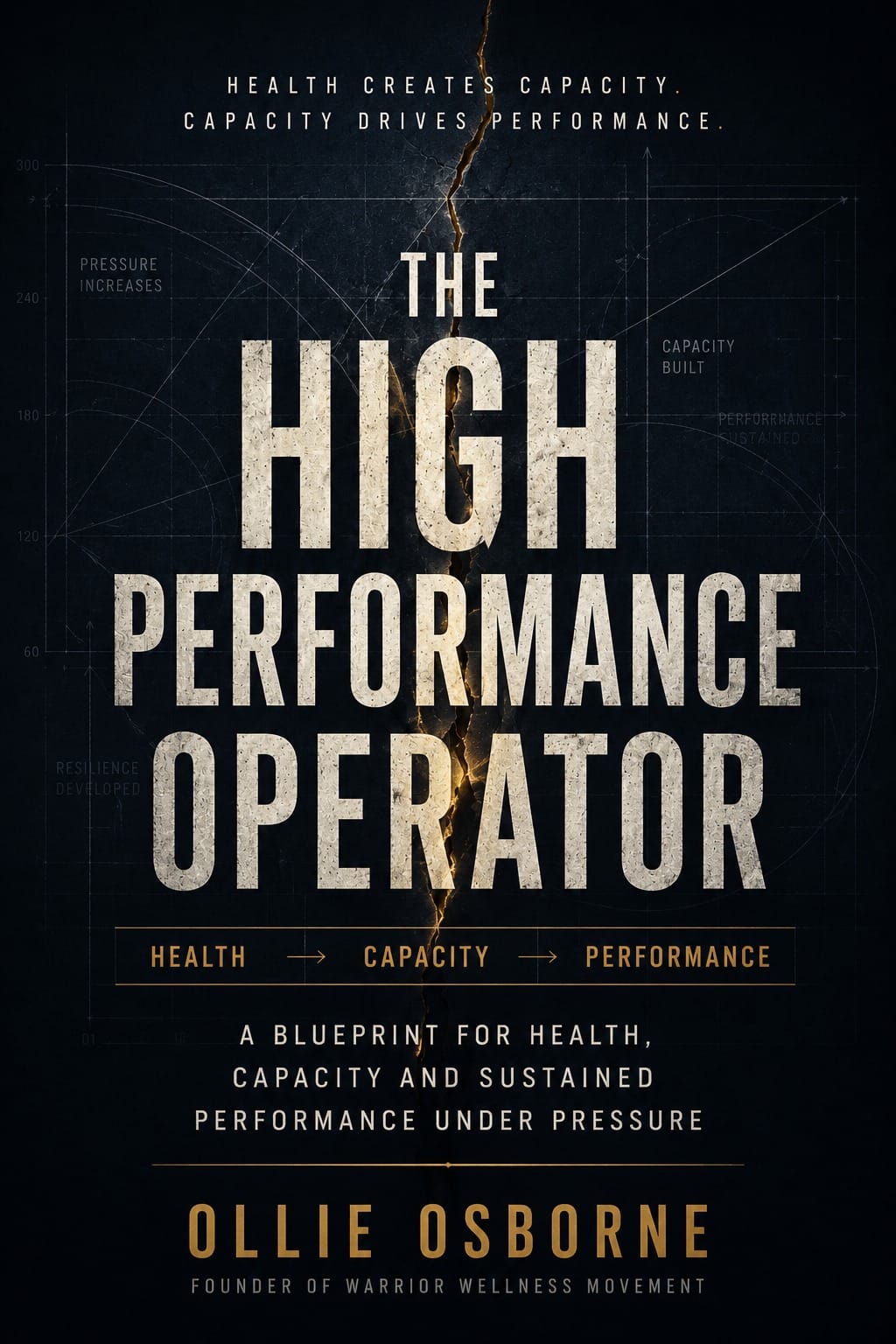
It’s also become a central idea as I’ve been writing The High Performance Operator. (Out in 4 weeks.)
Because once you start viewing health through the lens of Capability Debt, many things begin to make more sense.
Why successful people suddenly feel less capable.
Why performance slowly declines without a dramatic event.
Why coping can continue for years before anyone notices there’s a problem.
And why waiting rarely improves the situation.
This is also why the philosophy behind Warrior Wellness Movement has become so simple.
Health Creates Capacity. Capacity Drives Performance.
Health isn’t the reward for success.
It’s the foundation that allows success to be sustained.
Without health, capacity gradually falls.
When capacity falls, performance eventually follows.
Not immediately.
Gradually.
Quietly.
Almost invisibly.
Until one day it no longer feels possible to keep going in the same way.
Perhaps that’s why I’ve become less interested in asking whether someone is burnt out.
I’m far more interested in asking a different question.
How much Capability Debt have they accumulated before they reached that point?
Maybe that’s a better place for all of us to start.
Not by asking whether we’re coping.
But by asking whether we’re genuinely recovering.
Because there is a difference.
And that difference may determine far more than we realise.
What does that question make you think about your own life?
#CapabilityDebt #HealthCreatesCapacity #Leadership #Wellbeing #Performance #ExecutiveHealth #BusinessOwners #Resilience #Recovery #WarriorWellnessMovement